Buy Wholesale Food Packaging For Sale (500+ Units From $295)
$295.00
Product Short Description Block
Current Price: From $295 Per Pallet
Status: In Stock – Ready To Ship
Seller: Verified U.S. Food Packaging Liquidation Supplier
Source: Major Retailer Overstock, Shelf Pulls and Warehouse Surplus
Condition: Mixed – New In Original Case, Shelf Pulls and Unopened Overstock
Brands Included: Dart, Solo, Pactiv, Reynolds, Glad, Ziploc, Anchor Hocking and More
Sizes: Assorted – Includes Small, Medium, Large and Extra-Large Capacity Units Across All Product Types
Items per Pallet: 500+ Units Assorted Styles
Estimated Retail Value: Up To $1,800+
Packaging: Original Retail Cases, Poly-Wrapped Bundles, Master Cartons and Secure Freight Wrap
Distribution Agreement Required: No
Shipping Area: Fast Freight Delivery Across USA and Worldwide
Our wholesale food packaging pallets are sourced directly from major U.S. retailers and national distributors, giving resellers and business buyers access to high-demand food service and storage supplies at a fraction of retail cost.
Detailed Breakdown By Brand or Category
Dart Container Corporation (80 to 100 Units)
Sizes: Assorted 8oz, 12oz, 16oz, 32oz Foam and Plastic Cups, Lids, and Hinged Containers
Note: Dart is one of the most recognized names in food service disposables. Their foam and clear plastic containers are in constant demand from restaurants, food trucks, and cafeterias, making them fast movers for wholesale resellers.
Solo Cup Company (70 to 90 Units)
Sizes: Assorted 9oz, 12oz, 18oz, 24oz Party Cups, Hot Cups, Cold Cups, and Plates
Note: Solo branded cups and plates are household names and sell reliably on Amazon, restaurant supply platforms, and in bulk to event planners. Pallets typically include a strong mix of party cups and food service plates.
Pactiv Evergreen (80 to 100 Units)
Sizes: Assorted Deli Containers, Aluminum Trays, Take-Out Boxes, and Clamshell Containers in Multiple Sizes
Note: Pactiv supplies some of the most widely used commercial food packaging in the United States. Their aluminum trays and clamshell containers are popular with catering businesses and meal prep services, giving resellers a straightforward path to bulk buyers.
Glad and Ziploc (70 to 90 Units)
Sizes: Assorted Quart, Gallon, and 2-Gallon Storage Bags, Wrap Rolls, Press-and-Seal Rolls, and Containers
Note: Glad and Ziploc are two of the best-selling consumer food storage brands in the country. These products move quickly at flea markets, discount stores, and online marketplaces because every household recognizes and trusts both names.
Reynolds Consumer Products (60 to 80 Units)
Sizes: Assorted Heavy-Duty Aluminum Foil Rolls, Non-Stick Foil, Parchment Paper Rolls, and Freezer Paper in Standard and Extra-Wide Widths
Note: Reynolds is the dominant brand in aluminum foil and parchment paper for both consumer and food service use. These items are consistent sellers in restaurant supply, grocery liquidation, and household goods resale channels.
Anchor Hocking and Assorted Store Brand Packaging (80 to 100 Units)
Sizes: Assorted Glass and Plastic Storage Containers, Lids, Deli Cups, Sauce Cups, and Condiment Containers in Multiple Sizes
Note: This category fills out the pallet with a variety of branded and private-label food storage containers sourced from national retail chains. These items appeal to home cooks, small food businesses, and bulk buyers stocking restaurant supply stores.
Example Pallet Manifest
Example Pallet Manifest – Total: 500+ Units
| Item Category | Estimated Quantity |
|---|---|
| Foam and Plastic Cups, Lids, and Containers (Dart) | 80 to 100 Units |
| Party Cups, Hot Cups, and Plates (Solo) | 70 to 90 Units |
| Clamshell Containers, Deli Trays, and Take-Out Boxes (Pactiv) | 80 to 100 Units |
| Storage Bags, Wrap Rolls, and Press-and-Seal (Glad and Ziploc) | 70 to 90 Units |
| Foil Rolls, Parchment Paper, and Freezer Paper (Reynolds) | 60 to 80 Units |
| Glass and Plastic Storage Containers and Assorted Lids (Anchor Hocking and Store Brands) | 80 to 100 Units |
| Total | 500+ Units |
This pallet is a strong fit for resellers on Amazon, eBay, and Facebook Marketplace, as well as flea market vendors, restaurant supply wholesalers, discount store owners, and anyone supplying small food businesses, with retail values running well above cost and strong profit margins available on every case sold.
Wholesale Food Packaging
Wholesale food packaging refers to the purchase of packaging materials in large quantities, typically at significantly lower per-unit costs than retail purchasing. Businesses buy in bulk to protect their margins, maintain consistent supply, and avoid the unpredictability of small-order pricing. For any food-related business operating at scale, retail packaging costs would eat deeply into profitability.
The range of products under this category is broad. It includes corrugated shipping boxes, kraft paper bags, rigid plastic containers, flexible pouches, clamshell trays, wraps, tubs, jars, and specialty formats like deli containers and heat-seal packaging. Each format serves a different product type, shelf environment, or distribution channel.
The cost advantage of buying wholesale is straightforward. A box of 500 flat-bottom pouches purchased wholesale can cost a fraction of what the same quantity would cost sourced from a retail office supply or kitchen store. Beyond pricing, buying in volume means fewer reorder cycles, more consistent branding across batches, and stronger negotiating leverage with suppliers over time.
Here’s the thing: wholesale food packaging is not just for large manufacturers. Independent food brands, small catering operations, and growing meal prep services all benefit from shifting to wholesale purchasing once their order volumes justify the minimum order quantities most suppliers set.
Where Can You Buy Wholesale Food Packaging Supplies?
Wholesale food packaging is available through several distinct channels, and the right one depends on your order size, lead time tolerance, and whether you need standard or custom formats.
Online Marketplaces and B2B Platforms: Sites like Alibaba, Uline, WebstaurantStore, and Amazon Business give buyers access to a wide range of packaging formats with transparent pricing and user reviews. These platforms are useful for comparing options quickly, but minimum order quantities and shipping timelines vary significantly between sellers.
Specialty Packaging Distributors: Companies that focus exclusively on food packaging, such as Berlin Packaging or Novolex, offer deeper product expertise, account management, and sometimes lower pricing for repeat buyers. They often stock both standard and custom formats.
Local and Regional Wholesalers: Physical wholesale suppliers allow you to inspect materials before committing to a large order. For perishable packaging types where texture, seal quality, or print clarity matters, being able to hold samples is a genuine advantage.
Direct from Manufacturers: Going directly to a packaging manufacturer typically yields the lowest unit costs but requires meeting higher minimum order thresholds and longer lead times, especially for overseas production.
| Sourcing Channel | Best For | Key Advantage | Key Limitation |
|---|---|---|---|
| Online Marketplaces | Small to mid-size buyers | Wide selection, fast comparison | Variable quality control |
| Specialty Distributors | Regular bulk buyers | Expert guidance, consistent stock | May require account setup |
| Local Wholesalers | Buyers needing samples | Hands-on inspection | Limited product range |
| Direct Manufacturers | High-volume buyers | Lowest unit cost | High MOQs, longer lead times |
What Is The Cheapest Place To Buy Wholesale Food Packaging Materials?
The cheapest option is almost always buying directly from a manufacturer, but that comes with conditions. You need to meet their minimum order quantity, often in the hundreds or thousands of units, and plan for longer lead times, especially with overseas factories.
For businesses not yet at that volume, online B2B distributors like Uline or WebstaurantStore frequently offer competitive pricing with lower minimums. Comparing quotes across at least three vendors before placing a large order is one of the simplest ways to save money without compromising on quality.
Factors that influence final pricing include order volume, material type (plastic is generally cheaper than glass or compostable materials), print complexity for branded packaging, and the supplier’s location relative to your warehouse. Domestic sourcing often costs more per unit but saves on freight, customs delays, and damage risk during transit.
How Do You Find Wholesale Food Packaging Suppliers And Manufacturers?
Finding a reliable supplier starts with knowing what you need before you search. Having clear specifications, including your preferred material, format dimensions, seal type, and food-contact compliance requirements, makes it far easier to evaluate whether a supplier can actually meet your needs rather than just sell you something close.
Trade directories like ThomasNet for U.S. manufacturers and Alibaba’s verified supplier listings for international sourcing are useful starting points. Industry trade shows such as Pack Expo in the United States are also strong venues for meeting vetted manufacturers and comparing products in person.
When vetting a supplier, the key questions are: Do they hold food-contact material certifications? What is their lead time on reorders? Do they offer test samples before a full order commitment? What is their quality control process? A supplier that cannot answer these directly is a risk, regardless of their unit pricing.
Working with a distributor rather than a manufacturer adds a layer of markup but typically delivers faster access to stock, more flexible minimums, and a single point of contact for multiple product types. For growing businesses still refining their packaging mix, that flexibility often outweighs the cost difference.
Which Wholesale Food Packaging Suppliers Are Available Near Your Location?
Proximity matters more than many buyers initially realize. A supplier located within your region can reduce freight costs, shorten reorder cycles, and make returns or quality disputes significantly easier to resolve. For businesses that operate with tight inventory windows, a local supplier’s two-day lead time can be worth more than the savings from an overseas manufacturer with a six-week production run.
In the United States, regional packaging distributors operate in most major metro areas. Searching for local packaging suppliers through directories like the Packaging Association or regional chambers of commerce can surface options that do not appear prominently in national online searches.
For businesses in the United Kingdom, Europe, or Australia, proximity to port cities tends to offer more supplier options and shorter import lead times for internationally sourced materials.
What Types Of Wholesale Food Packaging Boxes Are Available?
Boxes are one of the most widely used formats in food packaging, and the variety available at wholesale is broad. The right box type depends on what you are packaging, how it will be shipped or displayed, and what your customer expects when they open it.
Corrugated Boxes: The standard for shipping and heavy product protection. Available in single-wall and double-wall construction. Widely used for e-commerce food brands and large retail distribution.
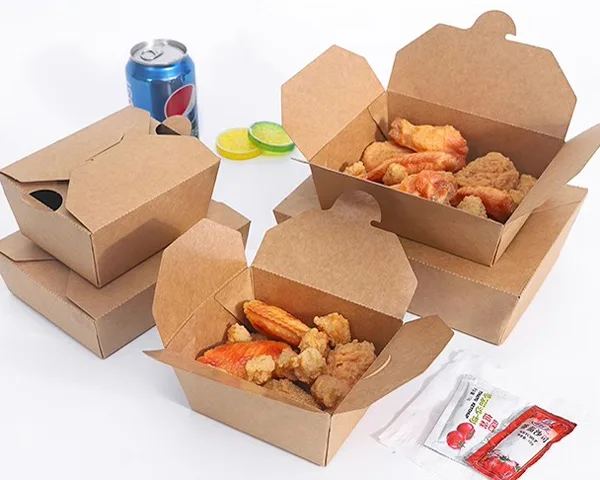
Kraft Paper Boxes: A popular choice for artisan food brands, bakery items, and gift packaging. Kraft gives a natural, sustainable appearance and is often available with custom printing.
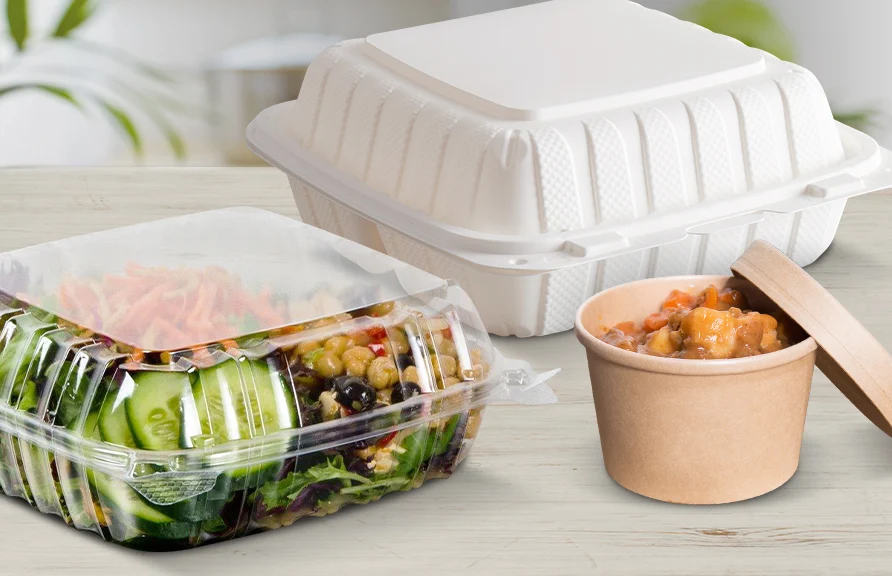
Clamshell Containers: Hinged designs that work well for deli items, baked goods, and grab-and-go retail. Common in clear PET plastic or compostable paperboard.
Folding Cartons: Lightweight, printable, and used extensively for cereal, snack bars, frozen meals, and dry goods. Easy to store flat and assemble on demand.
So what does this look like in practice? A meal prep business might use corrugated boxes for cold chain shipping, clamshells for individual portions in the fridge, and printed kraft boxes for gifting sets, all sourced from the same wholesale distributor.
What Are The Best Wholesale Food Packaging Bags And Containers?
The choice between bags and rigid containers comes down to the product itself. Bags work best for products that do not require structural support, such as dried goods, snacks, coffee, tea, and powders. Containers are better for liquids, sauces, spreads, portioned meals, and any product that needs to stand upright for retail display.
Bag formats include flat pouches, stand-up pouches with zip locks, pillow bags, and gusseted side-seal bags. Airtightness is a critical factor for shelf-stable products. A stand-up pouch with a zip-lock seal and a one-way degassing valve is the standard choice for specialty coffee brands for good reason: it extends freshness and holds its shape on a retail shelf.
Container formats include round and square plastic tubs, wide-mouth glass jars, clear PET round containers, and portion cups with peel-off film lids. Portion size consistency matters here. A deli operation needs containers that stack reliably and seal cleanly to prevent leaks in a refrigerated display case.
| Format | Best Product Match | Airtight Option | Typical Material |
|---|---|---|---|
| Stand-Up Pouch | Dry goods, coffee, snacks | Yes (zip lock + valve) | Foil laminate or kraft |
| Flat Pouch | Single-serve, travel portions | Yes (heat seal) | Plastic film |
| Rigid Tub | Sauces, spreads, dairy | Yes (snap lid) | HDPE or PP plastic |
| Glass Jar | Premium retail products | Yes (metal lid) | Borosilicate glass |
| Clamshell | Baked goods, deli | Partial (friction close) | PET or paperboard |
Is Eco Friendly Or Sustainable Wholesale Food Packaging Available?
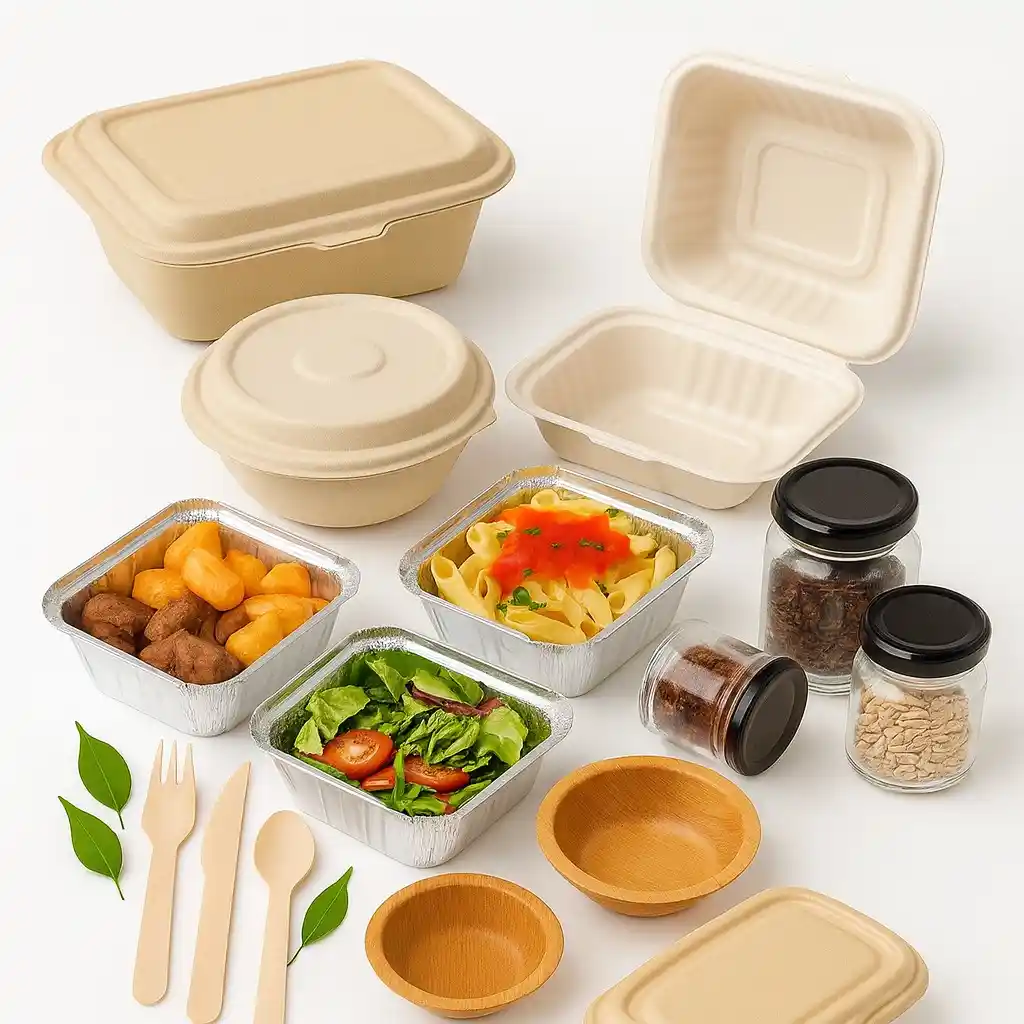
Sustainable wholesale food packaging is no longer a niche category. Most major distributors now carry biodegradable, compostable, and recyclable options across every major format, from kraft paper bags to PLA-lined cups and sugarcane fiber clamshells.
The real question is: what does “sustainable” actually mean for your product? Compostable packaging requires industrial composting facilities to break down properly. Recyclable packaging depends on your customer’s access to the right recycling stream. Recycled-content plastic reduces virgin material use but does not eliminate plastic from the supply chain. Each option involves a different tradeoff, and the right choice depends on your product, your customer base, and your brand’s sustainability commitments.
Consumer demand for sustainable packaging is measurable and growing. [Source needed: Statistic on consumer preference for sustainable food packaging, sourced from Nielsen or a comparable market research body.] Businesses that communicate their packaging choices clearly, including material sourcing and end-of-life disposal instructions, often see stronger brand loyalty from environmentally conscious buyers. This is increasingly a B2B concern as well, with retailers and foodservice buyers adding sustainability criteria to their supplier selection process.
Can You Find Wholesale Packaging Options For Pet Food?
Pet food packaging has specific requirements that set it apart from standard food packaging. Moisture resistance is critical because many pet foods contain high fat content that can degrade packaging quickly. Resealability matters to the end consumer, who needs to keep an opened bag fresh between uses. And durability must account for the weight and abrasion of dry kibble, which can puncture thinner films.
Common wholesale formats for pet food include multi-layer laminated bags with zip-lock closures, flat-bottom pouches with side gussets for larger quantities, and sealed tins or rigid containers for wet food. The laminate construction is typically a combination of PET, foil, and polyethylene layers to block moisture, oxygen, and light simultaneously.
Labeling requirements for pet food packaging are regulated separately from human food in the United States under AAFCO guidelines and, for imported products, additional FDA requirements. Any wholesale buyer planning to sell branded pet food must confirm their packaging supplier can accommodate the required label space and regulatory disclosures.
What Materials Are Used For Wholesale Food Packaging Such As Plastic Or Paper?
Material selection is one of the most consequential decisions in food packaging procurement. The wrong material can compromise product safety, accelerate spoilage, or create compliance problems. The most common options at wholesale scale are:
Plastic (HDPE, PP, PET, LDPE): The most widely used material category across food packaging. Plastic offers excellent moisture resistance, structural flexibility, and low unit cost. HDPE is common in bottles and rigid containers. PET is used for clear clamshells and bottles. PP is standard for microwavable tubs and caps.
Paper and Kraft: Used for bakery bags, cartons, wrapping paper, and outer packaging. Paper is printable, compostable in some forms, and widely accepted by consumers as a sustainable choice. It is not inherently moisture-resistant without lining.
Aluminum Foil and Foil Laminates: Used where high barrier properties are essential, such as confectionery wrappers, coffee pouches, and retort packaging for long shelf life.
Glass: Premium positioning material for sauces, condiments, and specialty items. Heavier and more fragile than plastic, but chemically inert and fully recyclable.
Composite and Compostable Materials: Sugarcane fiber, PLA bioplastics, and recycled content materials serve the sustainable packaging segment. Performance varies by product type and storage conditions.
| Material | Key Strength | Key Limitation | Common Use Case |
|---|---|---|---|
| HDPE Plastic | Durability, low cost | Not biodegradable | Bottles, rigid tubs |
| Kraft Paper | Sustainable appearance | Low moisture resistance | Bags, outer boxes |
| Foil Laminate | Maximum barrier | Not recyclable in most streams | Coffee pouches, snack bags |
| Glass | Chemically inert, premium | Heavy, fragile | Sauces, condiments |
| PLA Bioplastic | Compostable | Requires industrial composting | Cups, clear trays |
Is Wholesale Food Packaging Available For Frozen Or Pouch Products?
Frozen packaging requires materials that maintain their integrity at low temperatures, resist condensation, and provide strong enough seals to survive the freeze-thaw cycle during transport and retail handling. Standard packaging films often become brittle or lose seal strength at freezer temperatures, which is why frozen food packaging uses specialized low-temperature films.
For frozen goods, the common wholesale formats include vacuum-seal bags, co-extruded barrier pouches, and coated paperboard cartons with poly lining. Seal strength is measured in pounds per linear inch, and a supplier should be able to provide this specification for any packaging intended for frozen use.
Pouch packaging covers a wide range of formats and is used for both shelf-stable and frozen products. Stand-up pouches are common for frozen fruits, vegetables, and meal kits. Spouted pouches work well for purees, liquid soups, and baby food. Flat pouches are used for single-serve portions and vacuum-sealed deli items.
The real question is: can the pouch survive your distribution chain, not just the fill line? A pouch that seals cleanly at the factory but fails under the weight of a stacked pallet during freight is a costly problem. Always request drop-test and compression data from a supplier before committing to a pouch format for high-volume frozen distribution.
Can You Order Custom Or Bespoke Wholesale Food Packaging?
Custom wholesale food packaging is available through most mid-to-large packaging suppliers, and it is more accessible to smaller brands than many business owners assume. Custom options typically include printed branding, custom sizing, material specification, finish selection (matte, gloss, soft-touch), and structural design modifications.
The process generally follows these steps:
- Submit a design brief covering dimensions, material preference, print colors, and quantity requirements.
- Receive a quote based on your specifications and a minimum order quantity for the custom run.
- Review a digital proof and, where available, a physical sample or prototype.
- Approve the final sample before the full production run begins.
- Confirm lead time, packaging, and delivery logistics with the supplier.
Custom runs typically carry higher per-unit costs at lower quantities, but the unit cost drops significantly at higher volumes. For growing brands, the investment in branded packaging often pays back through improved retail shelf presence and stronger customer recognition.
What Wholesale Food Packaging Options Exist For Fast Food Takeaway And Meat Products?
Fast food and takeaway packaging has a distinct set of requirements. Grease resistance is non-negotiable for burger wrappers, pizza boxes, and fried food containers. The packaging must also be functional under speed: it needs to open, close, and carry without requiring effort from a customer who may be eating on the move.
Common formats include wax-coated paperboard containers, grease-proof burger wrappers, slotted pizza boxes, molded pulp trays, corrugated hot cups, and kraft paper carrier bags with reinforced handles.
Meat packaging carries different requirements. Freshness preservation is the priority. Vacuum packaging removes oxygen to extend shelf life and prevent discoloration. Modified atmosphere packaging replaces the internal air mix with a controlled combination of carbon dioxide and nitrogen to slow microbial growth. Both require specific film types and sealing equipment.
How Do You Start A Wholesale Food Packaging Business?
Starting a wholesale food packaging business involves more than finding a product to sell. The steps below outline the core requirements:
- Define your niche. Decide whether you will focus on a product category (eco-friendly packaging, foodservice, frozen goods) or serve a specific industry segment (restaurants, e-commerce food brands, delis).
- Establish supplier relationships. Identify manufacturers or importers that can supply your chosen formats at wholesale pricing. Negotiate minimum order quantities and payment terms.
- Verify compliance. Food-contact packaging materials in the United States must comply with FDA regulations. Ensure all products you distribute carry appropriate food-safe certifications. [VERIFY BEFORE PUBLISHING: Confirm current FDA food contact material requirements and any state-specific regulations with a regulatory compliance professional.]
- Set up logistics. Warehouse space, freight partnerships, and inventory management software are essential from day one.
- Register your business and obtain required licenses. Business registration, a reseller’s permit, and any state-specific business licenses must be in place before trading.
- Price and position competitively. Research your local and online competitors’ pricing before setting your own margins.
Why Choose Made In USA Wholesale Food Packaging Products?
Domestically manufactured food packaging offers several practical advantages that offset the typically higher unit costs. Lead times are shorter because there is no ocean freight, customs clearance, or port delay in the supply chain. Reorders can often be fulfilled within days rather than weeks.
Quality assurance is also more straightforward. U.S. manufacturers operate under domestic food-contact material regulations enforced by the FDA, which means documentation and compliance records are easier to obtain and interpret than overseas equivalents.
For certain buyer segments, the “Made in USA” designation carries genuine commercial value. Specialty food brands, premium restaurant groups, and B2B buyers with domestic sourcing commitments may prefer a supplier that can make that claim. It can be a differentiation point in a competitive packaging supply market.
Frequently Asked Questions About Wholesale Food Packaging
What Are The Benefits Of Wholesale Food Packaging?
Buying wholesale food packaging reduces the per-unit cost of every box, bag, or container your business uses, which directly improves margin. It also ensures consistent supply, reduces reorder frequency, and gives you more control over branding when you purchase at volumes that justify custom printing. For food businesses at any scale, wholesale purchasing is typically more cost-effective than sourcing packaging from retail channels.
Where Can You Buy Wholesale Food Packaging Supplies?
Wholesale food packaging supplies are available through online B2B marketplaces such as Uline and WebstaurantStore, specialty packaging distributors, local wholesale suppliers, and directly from manufacturers. The best channel depends on your order volume, lead time requirements, and whether you need standard or custom formats. Comparing at least three sources before committing to a supplier is always recommended.
How Do You Choose The Right Wholesale Food Packaging?
Choose wholesale food packaging based on the food’s temperature, moisture level, portion size, transport method, and storage needs. Test a small sample order before buying large case quantities to check for leaks, poor lid fit, grease transfer, or damage during delivery.
Can Wholesale Food Packaging Be Customized With Your Brand?
Yes, many packaging suppliers offer custom printing for food boxes, bags, cups, labels, and pouches. Minimum order quantities, setup fees, production times, and print options vary, so request a proof and written quote before placing a custom packaging order.
Is Eco-Friendly Wholesale Food Packaging More Expensive?
Eco-friendly wholesale food packaging can cost more than standard plastic or foam options, especially for smaller orders. However, pricing depends on material, order volume, shipping distance, and supplier. Confirm whether products are recyclable or compostable in your local waste system before making environmental claims.
Reviews
There are no reviews yet.