Buy Milwaukee Tool Pallets For Sale (150+ Tools From $1,495)
$1,495.00
Product Short Description Block
Current Price: From $1,495 Per Pallet
Status: In Stock – Ready To Ship
Seller: Verified U.S. Power Tool and Hardware Liquidation Supplier
Source: Major Retailer Overstock, Shelf Pulls and Customer Returns
Condition: Mixed – New In Box, Like-New, and Light Customer Returns
Brands Included: Milwaukee, Milwaukee M18 FUEL, Milwaukee M12, Milwaukee PACKOUT, Milwaukee SHOCKWAVE, Empire Level, and More
Sizes: Assorted Tool Sizes and Voltages (M12 12V, M18 18V, MX FUEL, Corded and Hand Tools)
Items per Pallet: 150+ Items Assorted Power Tools, Batteries, Hand Tools and Accessories
Estimated Retail Value: Up To $12,000+
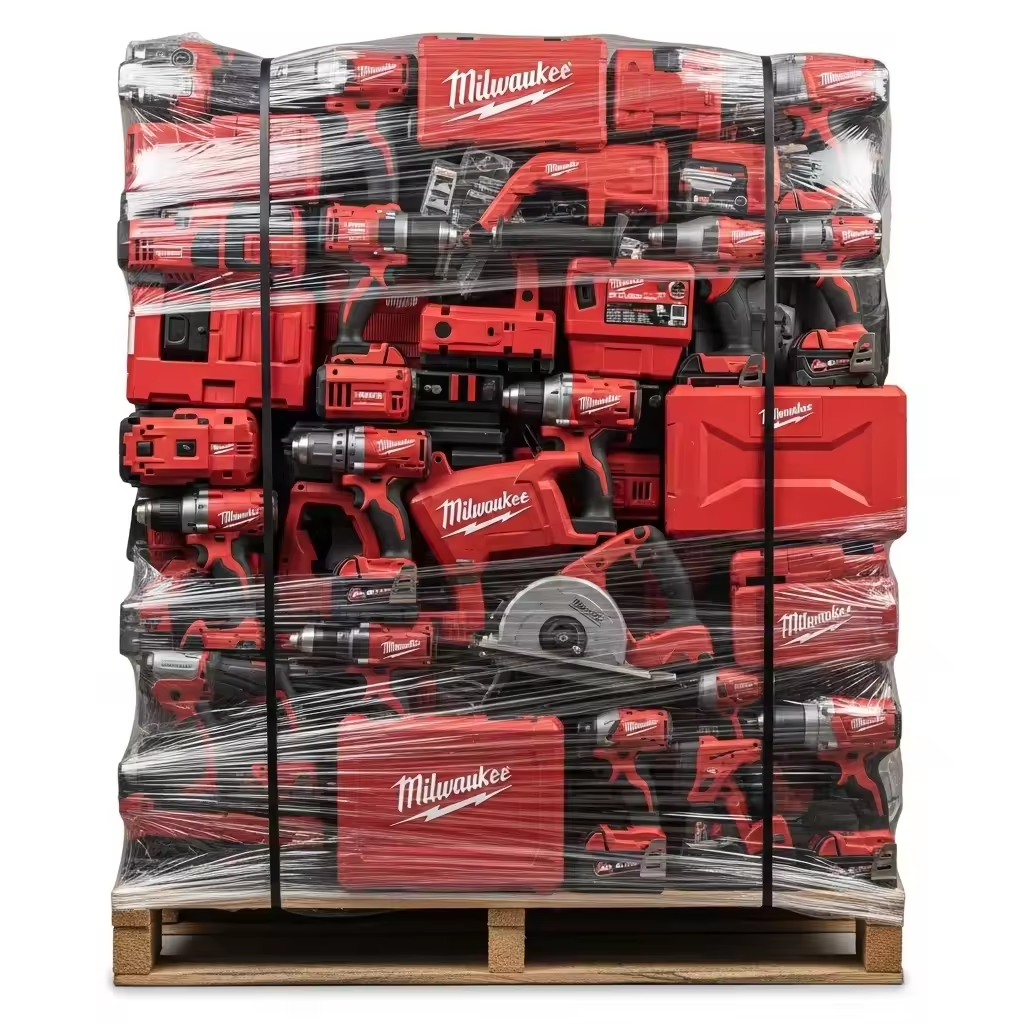
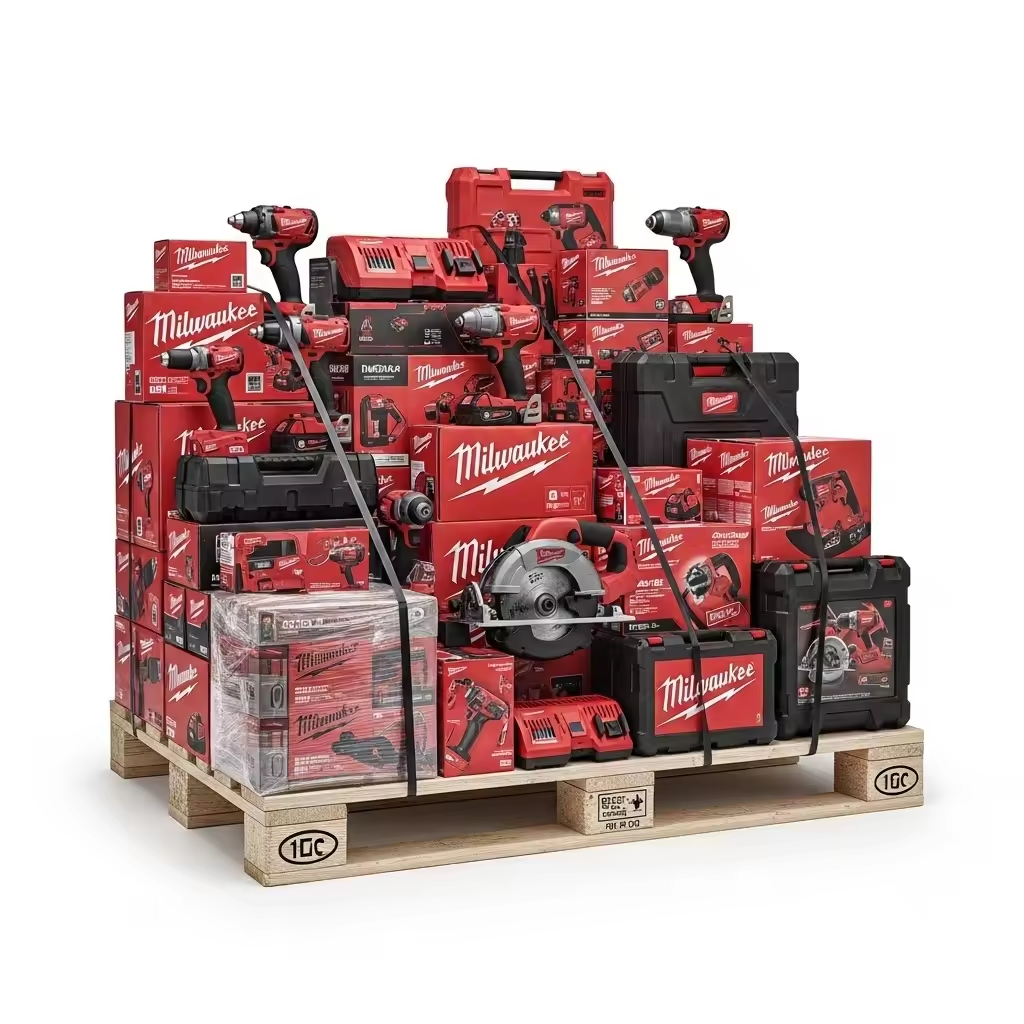
Packaging: Original Retail Boxes, Blister Packs, Master Cartons, Shrink Wrapped and Strapped Freight Pallet
Distribution Agreement Required: No
Shipping Area: Fast Freight Delivery Across USA and Worldwide
Every load of our Milwaukee tool pallets is sorted, counted, and manifested before it ships, so you know exactly what you are buying before it leaves the warehouse.
Detailed Breakdown By Brand Or Category
Milwaukee M18 Cordless Power Tools (20 to 30 Units)
Sizes: 18V Bare Tools and Full Kits
Note: Expect M18 FUEL hammer drills, impact drivers, circular saws, SAWZALL reciprocating saws, and grinders. M18 FUEL tools carry the strongest resale demand of any cordless line and often sell within days on eBay and Facebook Marketplace.
Milwaukee M12 Cordless Power Tools (15 to 25 Units)
Sizes: 12V Bare Tools and Compact Kits
Note: Includes M12 drill drivers, ratchets, inspection cameras, and rotary tools. Automotive technicians buy M12 ratchets and impact wrenches constantly, which makes them a fast flip at 50 to 60 percent of retail.
Milwaukee Batteries and Chargers (20 to 30 Units)
Sizes: M12 2.0Ah to 6.0Ah, M18 2.0Ah to 12.0Ah, Rapid and Dual Bay Chargers
Note: Loose batteries pulled from combo kits along with boxed replacement packs and chargers. Batteries are the highest margin item on the pallet because buyers always need spares and rarely wait for a sale.
Milwaukee Hand Tools and Cutting Tools (30 to 40 Units)
Sizes: Assorted Lengths and Gauges
Note: Contains FASTBACK utility knives, pliers, adjustable wrenches, tape measures, levels, pipe cutters, and channel locks. These move well in bulk lots at flea markets and swap meets with very little effort.
Milwaukee SHOCKWAVE Accessories and Bit Sets (30 to 40 Units)
Sizes: 1/4 inch Hex, Impact Duty Sets from 10 to 100 Pieces
Note: Driver bit sets, hole saws, spade bits, nut drivers, and SAWZALL blade packs. Low cost per unit and strong retail pricing, which makes them ideal for bundling with a tool to raise your average sale price.
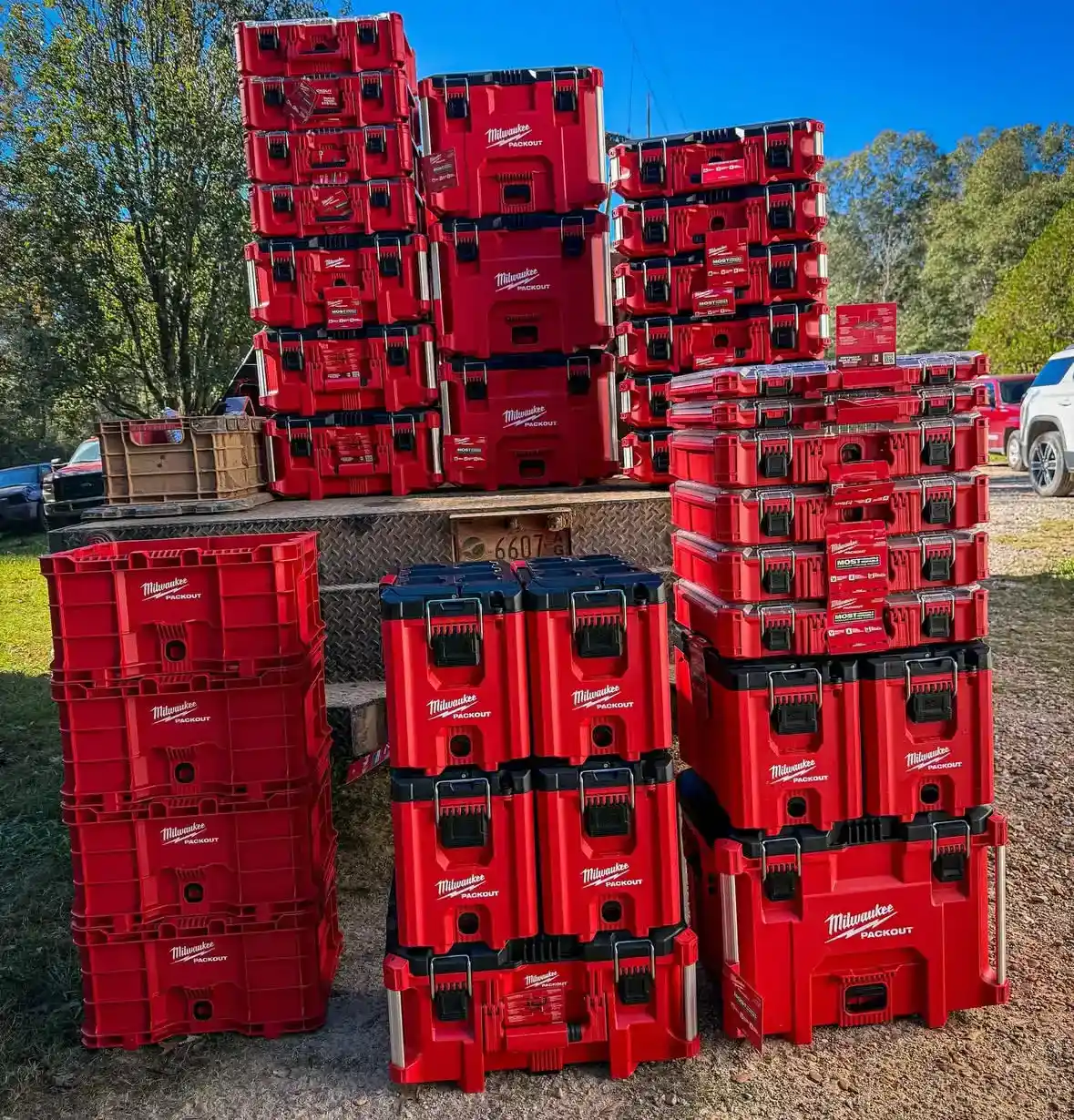
Milwaukee PACKOUT Storage and Job Site Gear (10 to 20 Units)
Sizes: Compact Organizers to Rolling Tool Boxes
Note: PACKOUT crates, tool bags, organizers, and job site coolers along with occasional lighting and work lights. PACKOUT storage holds its value better than almost any other storage system on the market.
Example Pallet Manifest
Example Pallet Manifest – Total: 155+ Items
| Item Type | Quantity |
|---|---|
| M18 Cordless Power Tools | 25 Units |
| M12 Cordless Power Tools | 20 Units |
| Batteries and Chargers | 25 Units |
| Hand Tools and Cutting Tools | 35 Units |
| SHOCKWAVE Accessories and Bit Sets | 35 Units |
| PACKOUT Storage and Job Site Gear | 15 Units |
| Total | 155 Items |
This pallet is perfect for resellers on eBay, Amazon, Facebook Marketplace, flea markets, pawn shops, local hardware stores, and online tool shops, where Milwaukee gear regularly returns 3 to 5 times the cost per unit and delivers some of the strongest profit margins in the liquidation market.
Milwaukee Tool Pallets
A Milwaukee tool pallet is a bulk lot of Milwaukee power tools, hand tools, batteries, and accessories sold together on a single shipping pallet rather than piece by piece. Sellers price the lot as one unit, which is where the discount comes from.
That inventory reaches the pallet market through four main channels. Retailer overstock happens when seasonal buys do not sell through. Cancelled distributor orders free up large blocks of new, boxed stock. Customer returns flow back from big-box retailers and online sellers. Job site surplus comes from contractors closing out projects or liquidating a fleet.
Packaging matters more than people expect. A properly prepared pallet is stacked by weight, banded with strapping, shrink wrapped several times, and often boxed at the corners to stop shifting during LTL transit. Loose or poorly wrapped loads arrive damaged, and damaged tools are unsellable at full price.
Who buys them? Contractors stocking multiple crews, tool rental businesses replacing worn equipment, independent hardware stores filling shelf gaps, and resellers who flip individual units online. Each group buys a different grade for a different reason.
Key Takeaways
- A Milwaukee tool pallet is a bulk lot of tools, batteries, and accessories sold as one freight unit.
- Wholesale pallets cost more upfront but carry lower risk than untested return loads.
- Manifested pallets are worth paying a premium for, especially on your first few purchases.
- Batteries and PACKOUT storage often deliver stronger margins than the bare tools.
- Freight, buyer premiums, and testing time all belong in your cost per unit.
- Local warehouse pickup lets you inspect before you pay and skips freight entirely.
- Lithium-ion batteries need dry, temperature-stable storage away from combustibles.
- Resale certificates can remove sales tax from qualifying purchases in most states.
- Expect to test, clean, and photograph every tool before listing it.
What Are The Benefits Of Buying Milwaukee Tool Pallets?
The main benefit is unit economics. When you buy one impact driver at retail, you pay full margin to the retailer. When you buy 150 mixed items as a single lot, you pay a wholesale or liquidation rate on the entire load, which drops your effective cost per tool substantially.
Bulk buying also solves a real operational problem. If you run three crews, outfitting each one from retail shelves takes weeks of shopping and inconsistent pricing. A pallet gives you matched batteries, chargers, and platform-compatible tools in one delivery.
Then there is resale strength. Milwaukee’s M18 FUEL and M12 lines hold value on the secondhand market because tradespeople trust them and the battery platform locks users in. A used Milwaukee tool typically clears faster than an equivalent tool from a lesser-known brand.
Expert Tip: If you are buying for your own crews rather than resale, prioritize battery count over tool count. Bare tools are cheap. Batteries are what actually keep a crew working.
What Comes Inside A Milwaukee Tool Pallet?
Typical contents include cordless power tools from the M12 and M18 platforms, batteries and chargers, hand tools like utility knives and pliers, SHOCKWAVE driver bits and cutting accessories, PACKOUT storage, and job site lighting.
Manifested pallets come with an itemized list showing model numbers, quantities, and often condition notes. Non-manifested pallets are sold blind by weight or pallet count. Blind loads are cheaper for a reason.
Single-SKU pallets contain one model repeated many times, which is ideal if you already know that item sells. Mixed assortment pallets spread your risk across categories but require more sorting labor.
Buyer Beware: A manifest tells you what should be in the box. It does not guarantee condition. Always read the grade description alongside the manifest, not instead of it.
| Grade | What It Means | Typical Risk |
|---|---|---|
| New in box | Unopened retail packaging | Lowest |
| Shelf pull | Opened or scuffed box, unused tool | Low |
| Customer return | Returned for any reason, may be untested | Medium to high |
| Salvage or as-is | Damaged, incomplete, or parts only | Highest |
Reviewing the manifest before you bid is the single highest-value habit in this business. It lets you assign a realistic resale value to each line item and walk away when the numbers do not work.
What Are The Typical Specifications Of A Milwaukee Tool Pallet?
Standard pallets are usually built on a 48 by 40 inch GMA footprint. Stack height commonly runs between 48 and 72 inches depending on carrier limits and whether the load is stackable.
Weight varies widely because tools, batteries, and steel storage are dense. A tool pallet is generally heavier per cubic foot than an apparel or general merchandise pallet, which raises freight class and cost.
Tool quantities per pallet depend entirely on item mix. A pallet heavy in bit sets and hand tools will show a much higher item count than one loaded with combo kits and PACKOUT boxes.
Every legitimate lot should carry a lot ID, a manifest reference, and Milwaukee model numbers such as the 2804 or 2853 series. Cross-check those model numbers against current retail listings to build your own value estimate rather than trusting the seller’s stated retail value.
Where Can You Buy Milwaukee Tool Pallets?
Two main sources exist. Wholesale distributors sell overstock and closeout inventory in bulk, usually with better condition consistency. Liquidation marketplaces run auctions and fixed-price listings sourced from retailer returns programs.
Closeout and discontinued inventory deserves special attention. When Milwaukee updates a model generation, the previous version often moves through liquidation channels in new condition at a steep discount. Those loads are frequently the best value on the market.
Verify any supplier before wiring money. Ask for a business address, check how long the company has operated, request references, and confirm whether they will provide photos of the actual pallet rather than stock images.
Which Wholesale Suppliers And Distributors Sell Milwaukee Tool Pallets?
Authorized distributors sell new, current-line inventory and typically require a reseller account, a tax ID, and sometimes a minimum order commitment. Their pricing is higher but the condition is predictable and packaging is intact.
Liquidation suppliers sell returns, overstock, and shelf pulls. Barriers to entry are lower. Condition is more variable, and warranty coverage is often void or limited on returned goods.
Reseller account requirements usually include a business license, an EIN, and a state resale certificate. Have those documents scanned and ready before you apply, since incomplete applications slow approval by days.
Always request the manifest before committing. On repeat orders, ask about volume discounts, tiered pricing, or freight consolidation across multiple pallets.
Can You Find Milwaukee Tool Pallets Near You?
Yes, in most metro areas. Regional liquidation warehouses, freight recovery centers, and auction houses hold local inventory and list pickup-only lots.
Warehouse pickup has two clear advantages. You eliminate freight, which can be one of the largest hidden costs on a heavy tool load. You also control handling, so nothing gets crushed in transit.
The bigger advantage is inspection. Being able to open a few boxes, check for missing batteries, and confirm the manifest matches reality before paying removes most of the guesswork.
How Can You Buy Milwaukee Tool Pallets Step By Step?
- Set a budget and decide your target cost per unit before you look at any listing.
- Choose your source: wholesale distributor for consistency, liquidation for lower entry price.
- Request the manifest and lot photos, then verify model numbers independently.
- Price the top ten highest-value items against current secondhand market prices.
- Get a freight quote to your delivery address before bidding or committing.
- Confirm payment terms, buyer premium, and any storage or loading fees.
- Submit your resale certificate to avoid paying sales tax where you qualify.
- Arrange delivery access, including whether you need a liftgate or a dock.
- Photograph the pallet on arrival before cutting the wrap, in case of damage claims.
- Sort, test, grade, and list within the first week to keep capital moving.
Freight is the cost most new buyers underestimate. Tool pallets are dense, and residential delivery with a liftgate costs significantly more than dock-to-dock commercial delivery.
Payment methods vary. Auctions often add a buyer premium as a percentage of the winning bid, plus processing fees. Both belong in your math before you bid, not after.
How Do Milwaukee Tool Pallet Auctions Work?
Most run as timed online auctions with a closing deadline, sometimes with an anti-sniping extension. Others use live bidding or a fixed Buy It Now price for buyers who want certainty.
Reserve prices mean the seller will not release the lot below a hidden threshold. Bidding increments step up automatically as the price rises, which is how people accidentally overpay in the final minute.
The strategy that works is boring: set a maximum bid based on your landed cost calculation and never exceed it. Emotional bidding is the fastest way to buy a losing pallet.
Total landed cost = winning bid + buyer premium + processing fees + freight + liftgate or handling + your testing and listing labor. Divide that total by the number of sellable units, not the total unit count, because some items will always be dead stock.
What Are Milwaukee Tool Liquidation And Return Pallets?
Liquidation pallets are excess inventory sold off cheaply to clear warehouse space. Return pallets are goods sent back by customers and resold in bulk rather than restocked.
Overstock means unsold new inventory in original packaging. Shelf pulls are items removed from display, usually unused with cosmetic box wear. Customer returns cover everything from unopened change-of-mind returns to genuinely defective tools.
The risks are real. Missing batteries, missing chargers, swapped items inside boxes, and tools returned because they actually failed. Warranty coverage on liquidated goods is frequently limited or void.
This is why reviewing the manifest matters so much. A manifest with condition notes per line item is worth paying more for than a cheaper blind load.
Should You Buy Amazon Return Pallets Of Milwaukee Tools?
They can work, but they carry the widest condition spread of any pallet type. Contents typically include cordless tools, batteries, accessory sets, and hand tools returned through online orders.
Condition variability is the core issue. Some items are unopened. Others are missing components, have been used on a job, or were returned because they stopped working.
The savings are genuine, often the lowest cost per unit available. The tradeoff is your labor and your loss rate.
How Much Does A Pallet Of Milwaukee Tool Pallets Cost?
Price depends on condition grade, whether the load is manifested, the retail value of the mix, the battery-to-tool ratio, and how much freight distance is involved. Two pallets with identical item counts can differ enormously in price.
| Pallet Type | Relative Cost | Best For |
|---|---|---|
| New overstock | Highest | Retailers, rental fleets |
| Shelf pull | Moderate | Experienced resellers |
| Customer return | Lower | Volume flippers with testing setup |
| Salvage or as-is | Lowest | Parts and repair sellers |
To calculate cost per tool, divide total landed cost by the number of units you realistically expect to sell. If a pallet holds 150 items and you expect 20 to be unsellable, divide by 130.
Evaluate value by pricing the top ten items on the manifest at realistic secondhand rates, not at manufacturer retail. If those ten items alone cover most of your landed cost, the rest of the pallet is your margin.
Is Buying Milwaukee Tool Pallets Profitable?
It can be, and Milwaukee’s brand strength gives you a genuine advantage over generic tool loads. Profitability is not automatic, though. It depends on your buy price, your sell-through rate, and how honestly you account for expenses.
Operating expenses stack up quickly: freight, marketplace fees, payment processing, shipping supplies, outbound postage, storage space, and your own time testing and listing. Many first-time buyers count only the pallet price and wonder where the profit went.
Break-even is simple to calculate. Add landed cost plus estimated selling fees, then divide by your expected number of sellable units. That number is the minimum average sale price you need per item.
Realistic margin expectations vary by grade and by how much labor you invest. Anyone promising a fixed multiple on every pallet is selling optimism, not inventory. Treat resale value estimates as ranges, and expect your first pallet to teach you more than it earns.
How Can You Make Money Reselling Milwaukee Tool Pallets?
| Platform | Best Item Type | Speed |
|---|---|---|
| eBay | Bare tools, discontinued models | Moderate |
| Facebook Marketplace | Combo kits, PACKOUT, local pickup | Fast |
| Amazon | New in box, high-volume SKUs | Slow to set up |
| Flea markets and swap meets | Bits, hand tools, accessories | Immediate |
Pallet splitting is the core strategy. Break the load into individual listings so each item earns full market price instead of a discounted bulk rate. Sell the slow movers as bundled lots at the end.
Bundling works especially well with the Milwaukee platform. Pair a bare tool with a battery and charger and you can price the bundle well above the sum of the parts, because buyers want a working setup on day one.
Price competitively by checking recent sold listings, not active ones. Active listings show what sellers hope to get. Sold listings show what buyers actually paid.
How Should You Store Milwaukee Tool Pallets?
Store tools in a dry, temperature-stable space off the concrete floor. Concrete wicks moisture upward, which promotes corrosion on exposed metal and degrades cardboard packaging.
Theft prevention matters because tools are among the most stolen inventory categories. Use locked storage, limit access, and avoid storing high-value pallets in visible garage or roadside spaces.
Lithium-ion battery safety is not optional. Keep packs at moderate temperatures, away from heat sources and combustible materials. Do not stack heavy items on battery cartons. Inspect for swelling, cracking, or leakage, and isolate any damaged pack immediately. If you are unsure how to handle or dispose of a damaged pack, consult a qualified professional or your local hazardous waste authority.
Frequently Asked Questions About Milwaukee Tool Pallets
Is Buying Milwaukee Tool Pallets Profitable For Resellers?
It can be profitable, but results depend on buy price, condition grade, and sell-through rate. Milwaukee’s strong secondhand demand helps, though freight, marketplace fees, and unsellable units reduce margins. Profitability improves once a reseller learns to read manifests and calculate landed cost accurately before bidding.
How Can You Increase Profits When Reselling Milwaukee Tool Pallets?
Split the pallet into individual listings rather than selling it as one lot. Bundle bare tools with batteries and chargers to raise average order value. Test and photograph every item to reduce returns. Price against recent sold listings, and sell slow-moving accessories as combined lots.
Are Milwaukee Tools From Liquidation Pallets Still Under Warranty?
Often not. Milwaukee warranty coverage generally applies to tools bought from authorized dealers with proof of purchase. Liquidated, returned, or resold tools frequently fall outside that coverage. Confirm warranty status with the supplier before buying, and never advertise warranty coverage to your own customers unless you can verify it.
How Many Tools Come In A Milwaukee Tool Pallet?
It varies widely by item mix. Pallets loaded with bit sets, hand tools, and accessories hold far more units than pallets built around combo kits and PACKOUT storage boxes. Always check the manifest for an exact count rather than relying on a seller’s estimated range.
Do You Need A Business License To Buy Milwaukee Tool Pallets?
It depends on the source. Most authorized wholesale distributors require a business license, an EIN, and a state resale certificate. Many liquidation marketplaces sell to individual buyers with no license needed. A resale certificate still helps, since it can exempt qualifying purchases from sales tax.
Related products
-
Tool Pallets For Sale & Hardware
Buy DeWalt Tool Pallets (30+ to 70+ assorted DeWalt tools-$500)
$500.79 Add to cart -
Tool Pallets For Sale & Hardware
Buy Air Conditioner Pallets For Sale (20+ Units From $1,495)
Original price was: $2,995.00.$1,495.00Current price is: $1,495.00. Add to cart -
Home Depot Return Pallets
Buy Pallet Wood Floor For Sale (240+ Square Feet From $1,200)
Original price was: $1,200.00.$995.00Current price is: $995.00. Add to cart

Reviews
There are no reviews yet.