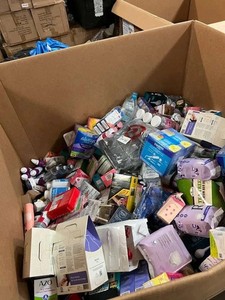
Buy Open Box Pallet Liquidation – Starting at $850
$850.00
Starting at $850 per pallet (freight shipping and taxes not included)
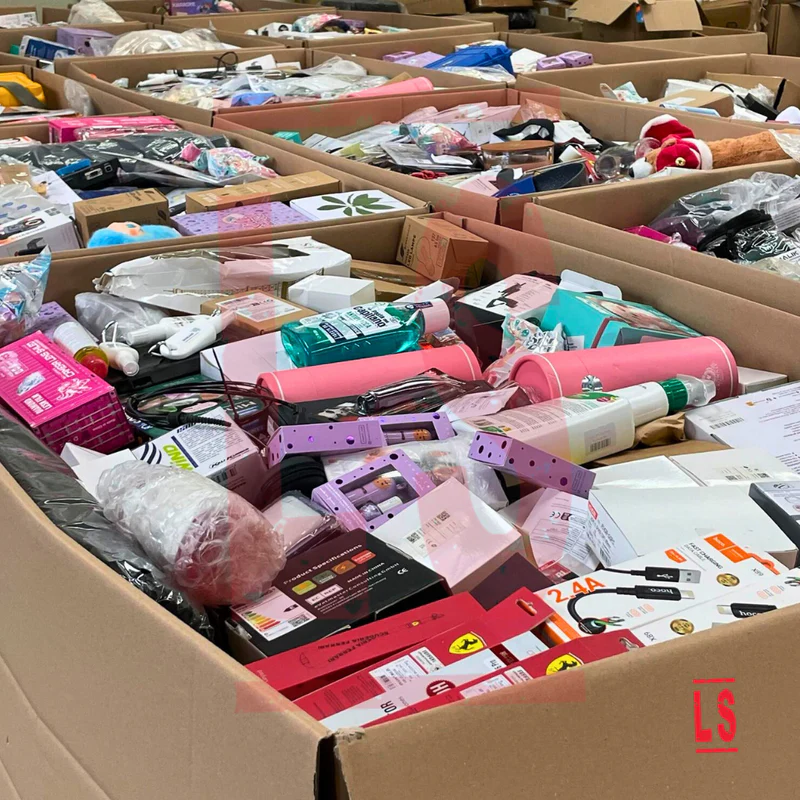
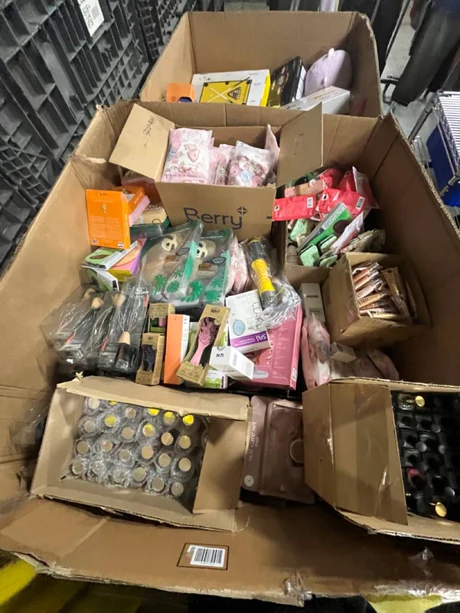
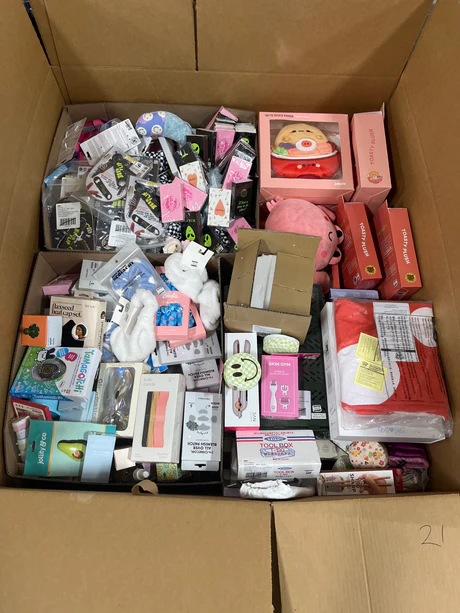
Find quality resale inventory with an open box pallet liquidation lot tailored for discount retailers, flea market vendors, bin store operators, and online marketplace sellers. These wholesale inventory lots feature mixed general merchandise, small home goods, tools, and consumer electronics sourced through secondary liquidations. Because stock varies by shipment, exact item selection, total unit counts, condition grades, and final pricing are determined by the individual pallet manifest.
Key Listing & Manifest Details
-
Starting Price: Base pricing applies to eligible unmanifested or select manifested wholesale pallets; final cost depends on lot size and inventory mix.
-
Manifest & Inventory Status: Please verify on the specific listing whether the pallet is fully manifested (itemized product schedule) or an unmanifested assorted wholesale lot.
-
Items per Pallet: Typically 100 to 120 items per pallet. Refer to the specific lot manifest for exact unit totals.
-
Condition Grade: Mixed conditions including new overstock, open-box returns, shelf pulls, and uninspected customer returns. Review individual lot condition notes prior to purchase.
-
Availability: Real-time stock fluctuates rapidly; confirm active inventory availability at checkout.
-
Resale & Distribution Rules: Certain items or third-party brands may require de-labeling, brand removal, or adherence to restricted channel resale policies.
-
Shipping & Pickup: Delivered via LTL freight or available for local warehouse pickup. Freight charges, liftgate fees, and applicable taxes are calculated by delivery zip code at checkout.
Product, Pricing & Brand Disclaimer: Starting price reflects base pallet cost only and excludes LTL freight delivery charges, liftgate fees, state, and local taxes. Liquidation merchandise consists of mixed-condition inventory, including open-box items and uninspected customer returns that may show cosmetic wear, packaging damage, or missing components. No resale profits, margins, or yields are guaranteed. All product names, trademarks, and registered brands (such as Amazon, Walmart, Target, Home Depot, Best Buy, or IKEA) belong to their respective trademark holders. Mention of these brands does not imply affiliation, endorsement, or direct sourcing relationships.
How to Verify Pallet Contents Using the Manifest
-
Manifested Pallets: Fully itemized listings provide a detailed inventory schedule containing individual item descriptions, unit counts, reported condition codes, and original estimated retail values (MSRP).
-
Unmanifested / Assorted Lots: Sold by bulk lot, weight, or general product category. Buyers should rely on the listing description, condition grade, and representative pallet photos before purchasing.
-
Estimated Retail Value (MSRP): Displayed MSRP figures serve as a historical reference based on original retail prices and do not constitute a guarantee of current market value, secondary market pricing, or resale profit.
What Categories May Be Included in Open Box Pallet Liquidation Inventory?
-
Home Essentials & Storage: Storage totes, decorative items, kitchen organizers, and small home accessories.
-
Small Domestic Appliances: Open-box countertop appliances, coffee accessories, and kitchen gadgets.
-
Tools & Hardware Accessories: Hand tools, light fixtures, small power tool accessories, and hardware components.
-
Consumer Electronics & Accessories: Cable adapters, audio accessories, small home tech, and open-box peripheral gear.
-
Household General Merchandise: Bedding accessories, lifestyle products, seasonal goods, and general retail merchandise.
Contents Disclaimer: The categories listed above represent common inventory types found across wholesale liquidation lots and do not guarantee specific item inclusion. Review the official manifest attached to your selected pallet for exact brand, product, and quantity details.
Sample 120-Item Manifest Breakdown (Illustrative Example Only)
The tables below illustrate a sample inventory breakdown for educational purposes only. They do not guarantee the specific contents, brands, or unit distribution of any active liquidation pallet.
Category Sub-Tables
General Home Goods & Storage
| Product Type | Sample Manifest Quantity |
| Household Storage & Kitchenware | 20 |
| Home Décor & Lifestyle Goods | 20 |
| Category Subtotal | 40 |
Tools, Hardware & Furniture Components
| Product Type | Sample Manifest Quantity |
| Hand Tools & Hardware Accessories | 15 |
| Furniture Components & Home Storage | 25 |
| Category Subtotal | 40 |
Electronics & Tech Accessories
| Product Type | Sample Manifest Quantity |
| Small Consumer Electronics & Accessories | 25 |
| Household Tech Accessories & Gadgets | 15 |
| Category Subtotal | 40 |
Sample Manifest Summary Table
| Merchandise Category | Sample Manifest Quantity |
| General Home Goods & Storage | 40 |
| Tools, Hardware & Furniture Components | 40 |
| Electronics & Tech Accessories | 40 |
| Sample Pallet Total | 120 Units |
Open Box Pallet Liquidation: Amazon Returns Cost Buying Safe
The resale market is currently experiencing a massive surge as entrepreneurs look for high-margin inventory beyond traditional thrift stores. Here’s the thing: while individual clearance items are great, the real volume lies in open box pallet liquidation. This process allows you to purchase bulk quantities of returned or overstock merchandise from major retailers like Amazon, Target, and Walmart at a fraction of the original retail price. However, navigating the world of “mystery pallets” and “liquidation grades” requires more than just a truck and a credit card; it requires a strategy.
This guide provides a comprehensive roadmap for sourcing open box pallets, evaluating regional markets from Long Island to San Antonio, and understanding the financial math behind Amazon return pallets. Whether you are looking to start a side hustle or scale a full-time flipping business, understanding the logistics and risks is the first step toward a profitable venture.
Key Takeaways
-
Inventory Variety: Open box pallets contain anything from Grade A electronics to Grade C general merchandise.
-
Regional Hubs: Key liquidation centers include Hauppauge (NY), Cleveland (OH), and San Antonio (TX).
-
Amazon Math: Expect to pay between 10% and 25% of the Original Suggested Retail Price (OSRP) for return pallets.
-
Risk Management: Manifested pallets provide transparency, while unmanifested pallets offer higher risk and higher potential reward.
-
Condition Matters: Grade A items are “like new,” while Grade C often includes non-functional or damaged goods.
-
Resale Legality: Buying and reselling liquidation items is legal under the First Sale Doctrine, provided the items are authentic and not recalled.
Open Box Pallet Liquidation
Open box pallet liquidation is the secondary market process where major retailers offload returned, overstock, or floor-model merchandise in bulk. Instead of processing individual returns—which is labor-intensive and costly—retailers sell these items in large wooden pallets to liquidation warehouses. These warehouses then sell the pallets to secondary buyers, including flea market vendors, eBay sellers, and discount store owners.
The process typically begins at the retail return counter. When a customer returns a product, it is inspected. If the packaging is damaged or the item has been opened, it often cannot be sold as “new” on the primary shelf. These items are aggregated into “lots.” A single pallet might contain a mix of electronics, small kitchen appliances, and home decor.
| Pallet Grade | Expected Condition | Best For |
| Grade A | Like new, original packaging, high functionality. | High-end eBay or Amazon Resale. |
| Grade B | Light use, possible minor scratches, box may be open. | Local Marketplace or Discount Stores. |
| Grade C | Visible wear, missing parts, or non-functional. | Parts harvesting or “As-Is” flea markets. |
What Are The Disadvantages Of Buying Open Box Items?
While the low price point is attractive, buyers must account for the inherent drawbacks of the liquidation model. The most significant risk is the “unknown factor.” Even with a manifest—a list of items on the pallet—the actual functionality of each unit is rarely guaranteed.
Common disadvantages include:
-
Missing Components: It is common to find electronics without charging cables or furniture missing a specific set of screws.
-
Voided Warranties: Most manufacturer warranties do not transfer to a secondary buyer in a liquidation sale.
-
Damaged Aesthetics: “Open box” often implies the original packaging is torn, taped, or entirely missing, which can lower the resale value on platforms like Amazon.
-
Inconsistent Volume: One pallet might be a “gold mine” of high-demand tech, while the next consists of low-margin seasonal decor.
Is It Safe To Buy Open Box Items?
Safety in the liquidation industry is synonymous with sourcing. Buying from a reputable open box pallet liquidation store is significantly safer than participating in anonymous online auctions with no physical address. Reputable liquidators allow for on-site inspections, where you can physically see the pallet wrap and check for signs of “cherry-picking” (when a seller removes the best items before sale).
To buy safely, always ask for the manifest. A manifest is your primary defense against a bad investment. It lists the items, their retail value, and their condition. If a seller refuses to provide a manifest or claims “all sales are mystery sales,” proceed with extreme caution. Furthermore, verify if the warehouse sources directly from the retailer or if they are a “broker” who has already skimmed the most valuable units.
Where To Find Open Box Pallet Liquidation Near You
Finding a local source is the most effective way to reduce overhead costs. Shipping a single pallet can cost anywhere from $150 to $500 depending on the weight and distance, which immediately eats into your profit margins. Searching for “open box pallet liquidation near me” is the starting point, but you must vet the results.
Look for warehouses that have a consistent “open to the public” schedule. Some warehouses only deal in truckloads (24-26 pallets), while others specialize in “break-bulk” sales where you can buy a single pallet. Visiting in person allows you to build a relationship with the warehouse manager, who may alert you when high-value loads (like “Small Electronics” or “High-End Tools”) arrive.
Open Box Pallet Liquidation On Long Island, New York
The Long Island market, particularly around Hauppauge, NY, is a major hub for retail returns due to its proximity to large distribution centers. Buyers in this region often find a high concentration of “mystery pallets” and home goods. Because the cost of living and business on Long Island is high, inventory moves fast.
Hauppauge locations often feature “bin stores” alongside pallet sales. In these setups, items are pulled from pallets and placed in bins for individual sale at a flat daily price. For the pallet buyer, this means you are competing with local retail foot traffic, so arriving on “delivery day” is essential.
Open Box Pallet Liquidation In Toledo And Northwest Ohio
Northwest Ohio, including Toledo and Swanton, is a “sweet spot” for liquidation. The region is a logistics crossroads, meaning shipping costs for the warehouses are lower, and those savings are often passed to the buyer. Pallets in this region frequently feature heavy machinery, power tools, and outdoor equipment.
If you are shopping in the Toledo market, come prepared with a trailer or a box truck. Many of these warehouses are located in industrial parks with loading docks designed for semi-trucks, though most will help you load a standard pickup with a forklift.
Open Box Pallet Liquidation In Cleveland And The Chicago Market
Cleveland and Parma, Ohio, offer a diverse range of merchandise, often sourced from regional department stores. The Cleveland market is known for having a high volume of “general merchandise” pallets, which are excellent for beginner flippers because they contain a wide variety of low-cost items that are easy to ship.
In contrast, the Chicago market is an urban liquidation hub. Inventory turnover here is rapid. Chicago warehouses often specialize in “high-count” pallets—lots containing hundreds of small items like cosmetics or phone accessories. Navigating these urban stores requires quick decision-making; a pallet available at 9:00 AM is often gone by noon.
Open Box Pallet Liquidation In Texas, Maryland, And Beyond
The Texas market is dominated by the Dallas-Fort Worth (DFW) and San Antonio corridors. Due to the sheer size of the state, these hubs often receive “bulkier” items like furniture and large appliances. San Antonio, in particular, has seen a rise in “boutique” liquidators who curate pallets for specific niches, such as baby gear or sporting goods.
In Maryland, Glen Burnie and Landover serve as the primary outlets for the D.C. metro area. These locations are prime for “High-End Retail” returns. Meanwhile, the Phoenix and Oregon markets are growing rapidly, serving as the Western gateways for Amazon’s massive West Coast return volume.
How Much Does An Amazon Liquidation Pallet Cost?
The cost of an Amazon liquidation pallet is not fixed; it is a percentage of the total retail value of the items inside. On average, you can expect to pay between $300 and $1,500 per pallet.
Several factors influence the final price:
-
Category: A pallet of electronics will always cost more than a pallet of clothing or “soft goods.”
-
Condition: Manifested Grade A pallets command a premium, whereas unmanifested “salvage” pallets can be bought for as little as $150.
-
Volume: Buying a “Full Truckload” (FTL) significantly reduces the price per pallet compared to buying individual units.
According to industry benchmarks, the “sweet spot” for profitability is purchasing pallets at 12-18% of OSRP. For example, if a pallet has $5,000 worth of merchandise, paying $750 is generally considered a fair deal, leaving enough room for shipping, platform fees, and the inevitable “junk” percentage.
Where Can You Buy Amazon Return Pallets Directly?
While you can buy from local warehouses, some choose to go “to the source” via online platforms. B-Stock is the primary authorized marketplace where Amazon auctions off its returns. However, there is a catch: buying directly from Amazon usually requires a business tax ID and the ability to handle large shipments.
For most individual sellers, the best route is a certified reseller or a local open box pallet liquidation store. These businesses buy the truckloads from Amazon, handle the logistics, and then “break” the load for individual sale. This allows you to avoid the complexities of freight forwarding and commercial business requirements.
Is Buying Amazon Return Pallets Worth It?
The short answer: It depends on your “sweat equity.” Buying Amazon return pallets is not a passive investment. To make it worth it, you must be prepared to sort, test, clean, and photograph every item.
Statistically, a standard Amazon “Mediums” pallet has the following breakdown:
-
70% Sellable: Items that are new or need minor cleaning.
-
20% Repairable: Items missing a cord or needing a simple fix.
-
10% Total Loss: Broken glass, biohazards, or counterfeit returns.
If you can sell that 70% for at least double your pallet cost, the venture is profitable. The “worth” comes from the ability to find hidden gems—like a high-end coffee maker or a designer smart watch—that were returned simply because the customer changed their mind.
Is Pallet Flipping A Profitable Side Hustle?
Pallet flipping is one of the most accessible “scale-up” businesses available today. Unlike traditional retail arbitrage where you find one item at a time, pallet flipping gives you hundreds of items instantly.
5 Key Benefits of Pallet Flipping:
-
Low Cost Per Unit: You are often buying items for $2 to $5 that retail for $30.
-
Product Variety: A single pallet can stock your entire eBay store across multiple categories.
-
Volume Purchasing Power: You get wholesale pricing without needing a direct contract with a manufacturer.
-
Resale Flexibility: You can sell high-value items on eBay and “lot up” lower-value items for local yard sales.
-
High Margin Potential: Finding one $400 item in a $600 pallet can “clear” your investment immediately.
What Are The Risks Of Buying Return And Liquidation Pallets?
We must be clear: this is a high-risk, high-reward business. The most common pitfall is “The Lemon Pallet.” This is a pallet where every electronic item has a cracked screen or a dead motherboard.
To mitigate risk:
-
Avoid Unmanifested Electronics: Unless you are skilled at soldering and repair, unmanifested electronics are a gamble.
-
Account for Fees: Remember that eBay and Amazon take 10-15% in fees, plus shipping.
-
Storage Space: A single pallet takes up a 4×4 area. If you live in an apartment, the logistics of “breaking” a pallet can be overwhelming.
What Is The Amazon Mystery Box And How Does It Work?
You may have seen “Amazon Mystery Boxes” advertised on social media for $50. Warning: Amazon does not sell mystery boxes directly to consumers. These are typically third-party listings.
In a professional liquidation context, a “mystery pallet” is simply an unmanifested load. These are often the most profitable because the liquidator hasn’t scanned the items, meaning they might have accidentally left high-value items inside. However, they are also where “trash” is most likely to be hidden. Approach mystery merchandise as a gamble, not a guaranteed business strategy.
What To Know About Reselling Items Bought From Open Box Pallet Liquidation
Is it legal? Yes. Under the First Sale Doctrine, once you legally purchase a product, you have the right to resell it. However, “legal” does not mean “without rules.”
-
Amazon Gating: If you plan to sell your items back on Amazon, be aware of “Brand Gating.” Many brands (like Nike or Apple) require specific authorization to sell.
-
Recalls: You are legally responsible for ensuring you do not sell recalled items. Always check the CPSC (Consumer Product Safety Commission) website.
-
Condition Transparency: You must be honest. Selling a “Grade B” item as “New” will lead to account suspensions and returns.
In a business context, “liquidation” means a company is turning assets into cash to pay creditors. When you buy a pallet, you are the “liquidator” providing that cash. Understanding this hierarchy helps you realize that the retailer’s goal is speed, not your profit. Your job is to find the value they were too busy to extract.
Frequently Asked Questions About Open Box Pallet Liquidation
What Is Open Box Pallet Liquidation And How Does It Work?
It is the bulk sale of retail returns and overstock. Retailers sell these items to liquidation warehouses, which then sell them to the public or resellers. It works by aggregating items into pallets based on category or condition and selling them at a fraction of retail value.
How Much Does An Amazon Liquidation Pallet Cost On Average?
Most buyers pay between $300 and $1,500 per pallet. The price depends on whether the pallet is manifested (listed) or unmanifested (mystery), and the quality of the items (Grade A vs. Grade C).
Reviews
There are no reviews yet.