Buy Baby Pallets For Sale (500+ Items From $795)
$795.00
Product Short Description Block
Current Price: From $795 Per Pallet
Status: In Stock – Ready To Ship
Seller: Verified U.S. Baby Products Liquidation Supplier
Source: Major Retailer Overstock, Shelf Pulls & Customer Returns
Condition: Mixed – New In Box, Like-New, and Light Customer Returns
Brands Included: Graco, Fisher-Price, Carter’s, Chicco, Evenflo, Pampers, Huggies and More
Sizes: Mixed Infant & Toddler Sizes (Preemie, Newborn, 0 to 24 Months, 2T to 5T) with Diaper Sizes Newborn to Size 6
Items per Pallet: 500+ Items Assorted Styles
Estimated Retail Value: Up To $9,500+
Packaging: Original Retail Boxes, Poly Bags, Sealed Cartons, Secure Freight Wrap
Distribution Agreement Required: No
Shipping Area: Fast Freight Delivery Across USA & Worldwide
These baby pallets for sale are pulled directly from national retailer inventory and shipped as sealed, stretch-wrapped freight pallets ready for immediate resale.
Detailed Breakdown By Category
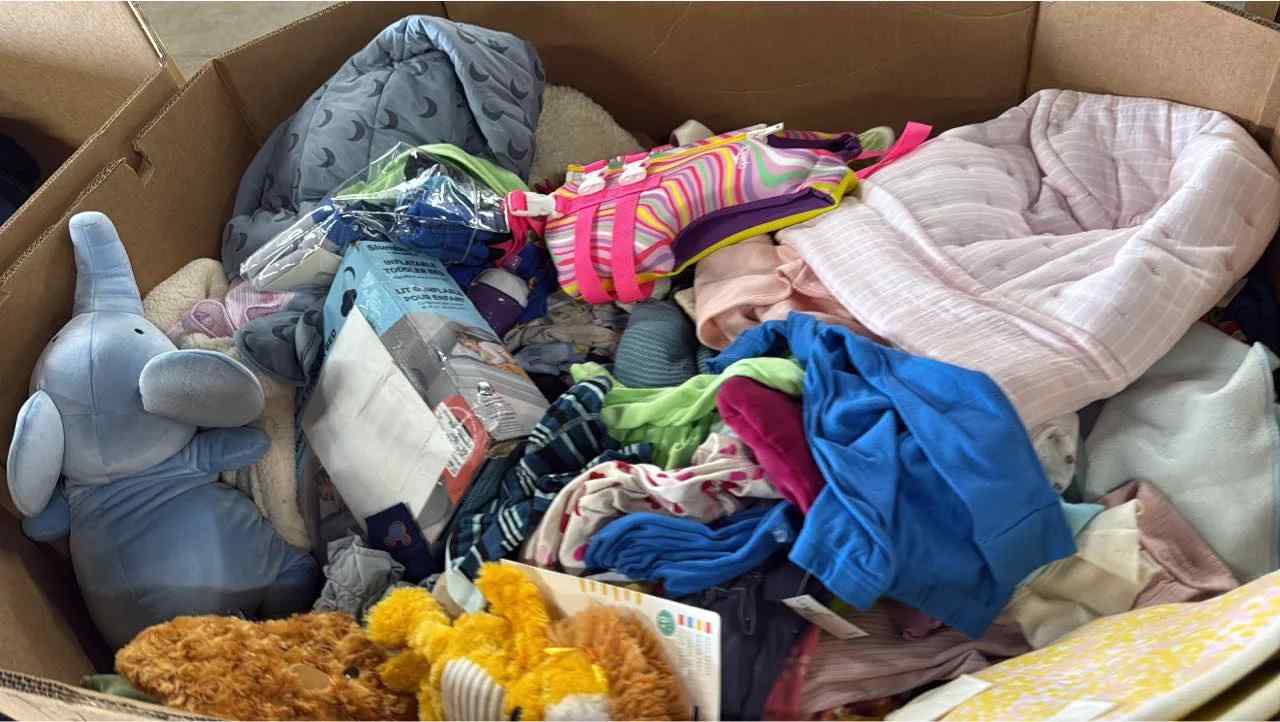
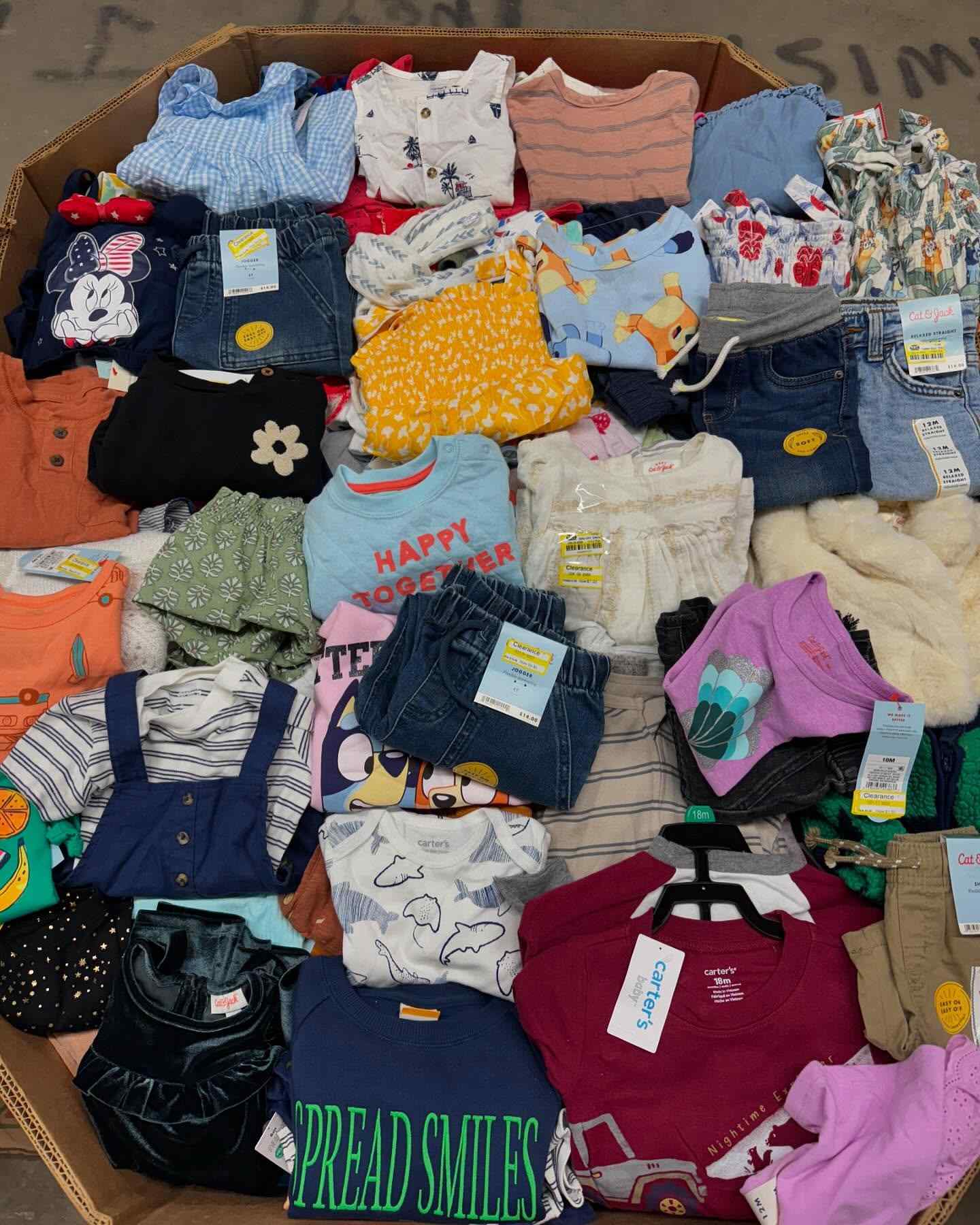
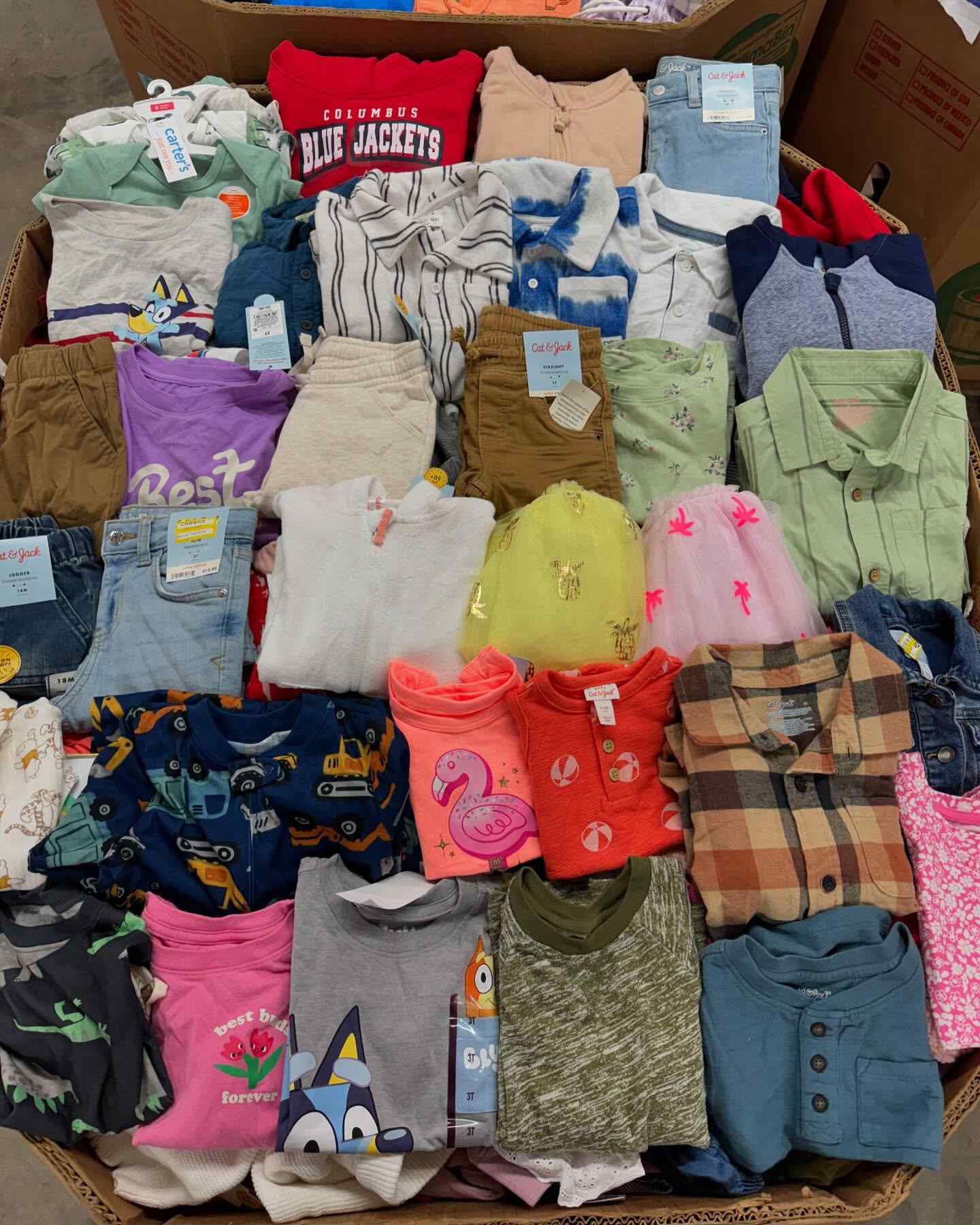
Baby Clothing and Sleepwear (180 to 220 pieces)
Sizes: Preemie, Newborn, 0 to 24 Months, 2T to 5T
Note: Includes bodysuits, footed pajamas, sleep sacks, rompers, multipacks and layette sets from Carter’s, Gerber and Little Star. Baby clothing multipacks move fast on Facebook Marketplace and consignment resale because parents buy several sizes at once.
Diapering, Wipes and Bath Care (100 to 130 items)
Sizes: Diaper Sizes Newborn to Size 6, Standard Retail Wipe Packs
Note: Contains boxed diapers, wipe refill packs, diaper cream, baby wash, lotion and hooded towel sets from Pampers, Huggies, Johnson’s and Aveeno. Consumable baby goods sell out quickly at flea markets and discount stores because buyers repurchase every week.
Feeding and Nursing Supplies (60 to 80 items)
Sizes: Standard Bottle Sizes 4 Ounce to 9 Ounce, Assorted Nipple Flow Levels
Note: Bottles, sippy cups, bottle brushes, breast pump accessories, pacifiers, bibs and high chair trays from Dr. Brown’s, Philips Avent, Tommee Tippee and NUK. Sealed feeding items hold strong retail pricing and are among the highest margin pieces in the pallet.
Baby Toys and Developmental Play (60 to 75 items)
Sizes: Age Graded 0 to 36 Months
Note: Rattles, teethers, activity gyms, stacking toys, plush, bath toys and musical crib soothers from Fisher-Price, VTech, Bright Starts and Skip Hop. Branded infant toys are a proven year round seller on eBay and Amazon and spike heavily during the holiday season.
Nursery Bedding, Blankets and Decor (30 to 50 items)
Sizes: Standard Crib Sheets 28 Inch by 52 Inch, Receiving and Swaddle Blankets
Note: Crib sheet sets, swaddle blankets, changing pad covers, mattress protectors, wall decor and nursery storage bins from Burt’s Bees Baby, aden + anais and Delta Children. Bedding is lightweight, easy to ship and popular with online boutique sellers.
Baby Gear and Travel Equipment (20 to 35 items)
Sizes: Standard Retail Boxed Units
Note: Strollers, car seats, bouncers, baby carriers, walkers, safety gates and portable playards from Graco, Chicco, Evenflo, Baby Trend and Ingenuity. These are the highest ticket units in the pallet and single stroller or car seat resales often cover a large share of the pallet cost.
Example Pallet Manifest
Example Pallet Manifest – Total: 500+ Items
| Item Category | Quantity | Condition |
|---|---|---|
| Baby Clothing and Sleepwear | 200 pieces | New with tags, shelf pulls, light returns |
| Diapering, Wipes and Bath Care | 115 items | New, sealed retail packaging |
| Feeding and Nursing Supplies | 70 items | New in box, like-new returns |
| Baby Toys and Developmental Play | 65 items | New in box, open box |
| Nursery Bedding and Blankets | 30 items | New with tags, shelf pulls |
| Baby Gear and Travel Equipment | 20 units | New in box, light customer returns |
| Total | 500 items | Mixed |
This pallet is perfect for resellers on eBay, Amazon, Facebook Marketplace, flea market booths, baby resale boutiques and local discount stores, with typical profit margins of 3 to 5 times the pallet cost once the gear and clothing multipacks are broken out and listed individually.
Baby Pallets For Sale
Baby pallets for sale attract three very different buyers. Resellers want inventory they can break down and flip. Small shop owners want to stock shelves without minimum order commitments from brand distributors. Parents and caregivers want to lock in a low per-unit price on consumables they will use anyway.
What lands on the pallet depends on the seller. Consumables like diapers, training pants, wipes, and formula move fastest. Clothing lots cover newborn through toddler sizing. Gear pallets carry strollers, bouncers, carriers, monitors, bottles, and nursery textiles.
Here is the thing: the word “pallet” tells you almost nothing about value. A pallet of size 1 diapers and a pallet of returned strollers can carry the same freight weight and completely different resale outcomes. Read the manifest, not the photo.
Key Takeaways
- A baby pallet is a bulk freight shipment of mixed or single-category infant products sold at wholesale or liquidation pricing.
- Diaper pallets are priced mainly by box count, brand mix, and condition, not by pallet size alone.
- A manifested pallet lists exactly what is inside. An unmanifested pallet is cheaper and riskier.
- A standard pallet commonly holds dozens of diaper boxes, but the count shifts with diaper size and packaging.
- A retail box and a wholesale case are not the same unit, which is the most common pricing mistake buyers make.
- Freight cost can add a significant share to the landed price, especially for residential delivery with a liftgate.
- Personal-use buyers rarely break even on a full pallet unless the diaper sizes match their child’s next 6 to 12 months.
- Resellers earn margin by breaking pallets into single boxes, bundles, and size-specific lots.
What Is A Pallet For Babies
A baby pallet is a single freight unit holding bulk infant merchandise, either one category such as diapers, or a mixed assortment of clothing, wipes, feeding items, and gear. It ships as one stretch-wrapped load rather than as separate parcels.
The difference from a case or a box is volume and pricing logic. A case is priced per unit with a fixed count. A pallet is priced as a lot, so your real cost only becomes clear after you divide the total by the usable items inside.
That distinction matters because pallets are sold “as is” far more often than cases are. Damaged packaging, mixed sizes, and short-dated stock are normal. You are trading certainty for a lower per-item price.
Where Can You Find Baby Clothes Pallets For Sale
Baby clothing pallets come from three main channels: retailer liquidation marketplaces that sell returns and shelf pulls, wholesale suppliers who buy overstock direct from brands, and closeout brokers who move seasonal leftovers after a buying season ends.
Expect a wide sizing spread inside a single lot. Newborn through 24 months usually dominates, with 2T to 5T appearing in smaller quantities. Seasonal balance is rarely even. A pallet cleared in February often skews heavily toward winter sleepwear and fleece.
Brand mix is the other variable. Most clothing lots blend store labels with recognizable mid-tier brands, and a small share of premium pieces. Ask the seller for a photo of an opened case, not just the wrapped pallet.
Why Choose Baby Clothes Pallets Wholesale
Wholesale clothing pallets work because per-piece cost drops sharply when you buy the whole lot. Individual items that carry meaningful retail tags often land in the low single digits per piece once you divide the pallet price by the piece count.
Margin comes from sorting. Resellers who separate by brand tier, size, and season consistently outperform sellers who list everything as one mixed bundle. Premium pieces sell individually. Store-label basics sell better as multipacks.
What Should You Know About Wholesale Baby Product Pallets
Mixed wholesale baby pallets go far beyond clothing and diapers. Most contain a spread of consumables, hard goods, and textiles, which is exactly why condition grading varies so much within one load.
| Category | Typical Items | Condition Notes |
|---|---|---|
| Consumables | Diapers, wipes, training pants, bath care | Usually new and sealed, check dates |
| Feeding | Bottles, sippy cups, bibs, pacifiers | High margin, verify seals intact |
| Toys and Play | Rattles, activity gyms, teethers | Mix of new and open box |
| Gear | Strollers, carriers, bouncers, monitors | Highest return rate, test before resale |
| Nursery Textiles | Crib sheets, swaddles, blankets | Lightweight, easy to ship individually |
Inventory reaches liquidation through overstock, shelf pulls, store closures, and customer returns. Pricing follows condition directly. Sealed overstock costs more per unit than returns because the seller carries less risk of dead stock.
How Much Does A Pallet Of Diapers Cost
Diaper pallet pricing is driven by box count, brand, and condition rather than by the pallet itself. Sealed name brand overstock sits at the top of the range. Unmanifested mixed returns sit at the bottom.
| Price Driver | Pushes Cost Down | Pushes Cost Up |
|---|---|---|
| Manifest | No manifest, sold as is | Full box-by-box manifest |
| Brand | Store label or unknown brand | Recognized national brand |
| Condition | Damaged cases, opened packs | Sealed retail packaging |
| Size Mix | Heavy in size 5 and 6 | Balanced newborn to size 3 |
Smaller diaper sizes typically move faster in resale because babies pass through them quickly and parents restock often. A pallet weighted toward the largest sizes can sit unsold for months even at a good purchase price.
Statement: Buyers consistently pay a premium for manifested diaper lots. Statistic: Verified price differential between manifested and unmanifested diaper pallets. Analysis: The premium exists because a manifest converts a gamble into a calculation, letting the buyer price the lot against known retail values before purchase.
How Many Diaper Boxes And Packs Fit On A Pallet
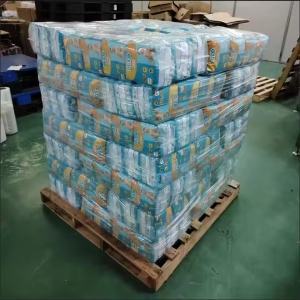
A standard 48 by 40 inch pallet commonly holds several dozen diaper boxes, stacked and shrink-wrapped to a safe freight height. The exact figure changes with box dimensions, not with the pallet.
Three things move the count:
- Diaper size. Newborn and size 1 diapers are physically smaller, so more units fit per box and more boxes fit per layer.
- Packaging format. Club-size boxes stack fewer per layer than standard retail boxes or bagged packs.
- Stack height limits. Freight carriers cap pallet height, which caps the number of layers regardless of box footprint.
So what does this look like in practice? Two pallets can carry identical box counts while holding very different total diaper counts. Always ask the seller for total units, not just total boxes.
What Is The Difference Between A Box Of Diapers And Diapers By The Case
A box is the retail unit a shopper buys off the shelf. A case is the wholesale unit, which either contains multiple smaller retail packs or is simply a larger bulk carton with a higher unit count.
That difference wrecks price comparisons. A listing offering 40 cases and a listing offering 40 boxes can differ by hundreds of diapers. One looks cheaper per unit and is not.
What Is The Pallet Of Diapers Liquidation Process And Its Value
Liquidation starts when a retailer needs shelf space. Overstock, discontinued packaging, seasonal resets, store closures, and customer returns all get pulled from the sales floor and consolidated at a returns center.
From there, the goods are sorted, palletized, and sold to liquidators or listed on wholesale marketplaces. Condition grading happens at this stage, which is why two pallets from the same retailer can be priced very differently.
Value for the buyer comes from that gap between clearance price and resale price. The catch is that grading standards are not universal across sellers. Terms like “shelf pull” and “like new” mean different things at different warehouses, so ask for a written definition.
How Does The Variety Of Top Diaper Brands Affect Pallet Purchases
Brand mix directly changes how quickly a pallet converts to cash. Recognized national brands sell fast at close to retail pricing. Lesser known and store-label brands sell slower and usually need a discount to move.
A mixed-brand pallet is not automatically worse. It often costs less upfront, and the name brand portion alone can cover a large share of the total pallet cost. The unknown brands then become margin rather than risk.
For flippers, demand is the real metric. Parents shop by brand loyalty more than almost any other category because skin sensitivity and fit are involved. A pallet full of brands nobody recognizes moves slowly no matter how sharp the price looks.
Where Can You Find Wholesale Huggies Diapers Distributors
Name brand diapers come through authorized wholesale distributors, liquidation marketplaces carrying retailer overstock, and closeout brokers moving discontinued packaging. Each channel has different authenticity controls.
Before ordering, verify four things: proof of sourcing, minimum order quantity, packaging condition, and return policy on damaged freight. Legitimate suppliers answer all four without hesitation.
What Is The Cheapest Place To Buy Diapers In Bulk
There is no single cheapest source. The right answer depends on whether you value certainty or the lowest possible unit price.
| Source | Best For | Main Tradeoff |
|---|---|---|
| Liquidation marketplaces | Lowest unit price | Condition and manifest risk |
| Wholesale clubs | Predictable stock | Higher per-unit cost |
| Direct pallet sellers | Balanced price and clarity | Freight and minimum lot size |
Two hidden costs decide the real winner. Shipping distance can quietly erase a low purchase price, and oversized lots tie up cash and storage space you may not have.
Calculate landed cost per diaper, including freight and any liftgate fee, before you decide. The listing price is only the starting number.
Is Buying A Pallet Of Diapers Worth It For Personal Use Or Resale
For personal use, it depends on size mix. A pallet only pays off if the sizes match what your child will actually wear over the next 6 to 12 months, and if you have dry, pest-free storage for a full pallet footprint.
For resale, the math is usually stronger. Breaking a pallet into single boxes, size-specific bundles, and local pickup lots creates several price points from one purchase, which speeds up sell-through.
Pros for resale: low unit cost, steady repeat demand, easy local pickup sales.
Cons for resale: freight cost, storage space, slow-moving large sizes.
Your break-even point is simple. Divide total landed cost by total diapers, then compare that number to what a single box realistically sells for in your local market.
What About Baby Wipes Pallets For Bulk Wholesale
Baby wipes pallets come from the same overstock and returns channels as diapers, but they usually cost less per pallet because wipes carry lower retail prices per unit and pack more densely.
Check packaging format before buying. Refill packs, flip-top tubs, and travel packs all sell to different buyers. Refills move well to repeat customers, while tubs sell better as single retail items.
Label sensitivity also matters. Fragrance-free, sensitive skin, and water-based formulations are the strongest sellers, and mislabeled or mixed-formula lots are harder to move. Confirm expiration or best-by dating, since wipes can dry out in long storage.
How Can You Calculate The Shipping Cost For A Pallet
Follow these five steps to estimate freight before you commit:
- Get the weight and dimensions. Ask the seller for gross pallet weight and stacked height, not just the pallet footprint.
- Confirm the freight class. Diapers and wipes are bulky but light, which affects density-based pricing.
- Enter both zip codes. Distance and lane availability drive the base rate more than anything else.
- Add accessorial fees. Residential delivery, liftgate service, and limited-access sites each add a separate charge.
- Compare against local pickup. If the warehouse is within driving distance, a rented truck often beats freight entirely.
Frequently Asked Questions About Baby Pallets For Sale
How Do Baby Pallets For Sale Work?
You buy a full pallet of baby merchandise as one lot at a wholesale or liquidation price. The seller wraps and ships it as freight, and you receive all items in a single delivery. Contents, condition, and quantity are set by the manifest, if one is provided.
What Is The Average Price Of A Pallet Of Diapers?
Prices vary widely based on box count, brand, condition, and whether the lot is manifested. Sealed national brand overstock costs significantly more than unmanifested returns. Request the total diaper count and divide by the price to compare listings accurately.
Can You Buy Baby Pallets Without A Resale Certificate?
Some suppliers sell to the general public with no license required, while others restrict sales to registered businesses. Liquidation marketplaces most often require a resale certificate or tax ID. Check the seller’s buyer requirements before you place an order, since approval can delay shipping by several days.
Are Baby Pallets Safe To Buy For Personal Use?
Sealed overstock diapers, wipes, and clothing are generally fine for personal use. Customer return lots carry more risk, since packaging may be opened or items may be incomplete. Inspect every sealed item on arrival and discard anything with broken seals, missing labels, or expired dating.
What Happens If Items Arrive Damaged Or Missing?
Policies differ by seller. Manifested pallets usually come with a shortage or damage claim window, often just a few days after delivery. Photograph the wrapped pallet before you cut the shrink wrap, then photograph the contents. Note any visible damage on the freight bill before signing for delivery.
Related products
-
Toys & Baby Pallets
Buy Wholesale Dog Toys Pallets ( 200 Pet Toys For Resale – From $250)
$250.00 Add to cart -
Toys & Baby Pallets
Buy Funko Pop Liquidation Pallet (250+ Sealed Collectibles From $250)
$250.19 Add to cart
Reviews
There are no reviews yet.